

Increasing conversion in the main flow of an AI product.
How we reorganized the reading of automated property record analysis to make findings clearer, speed up decision-making and increase product usage.
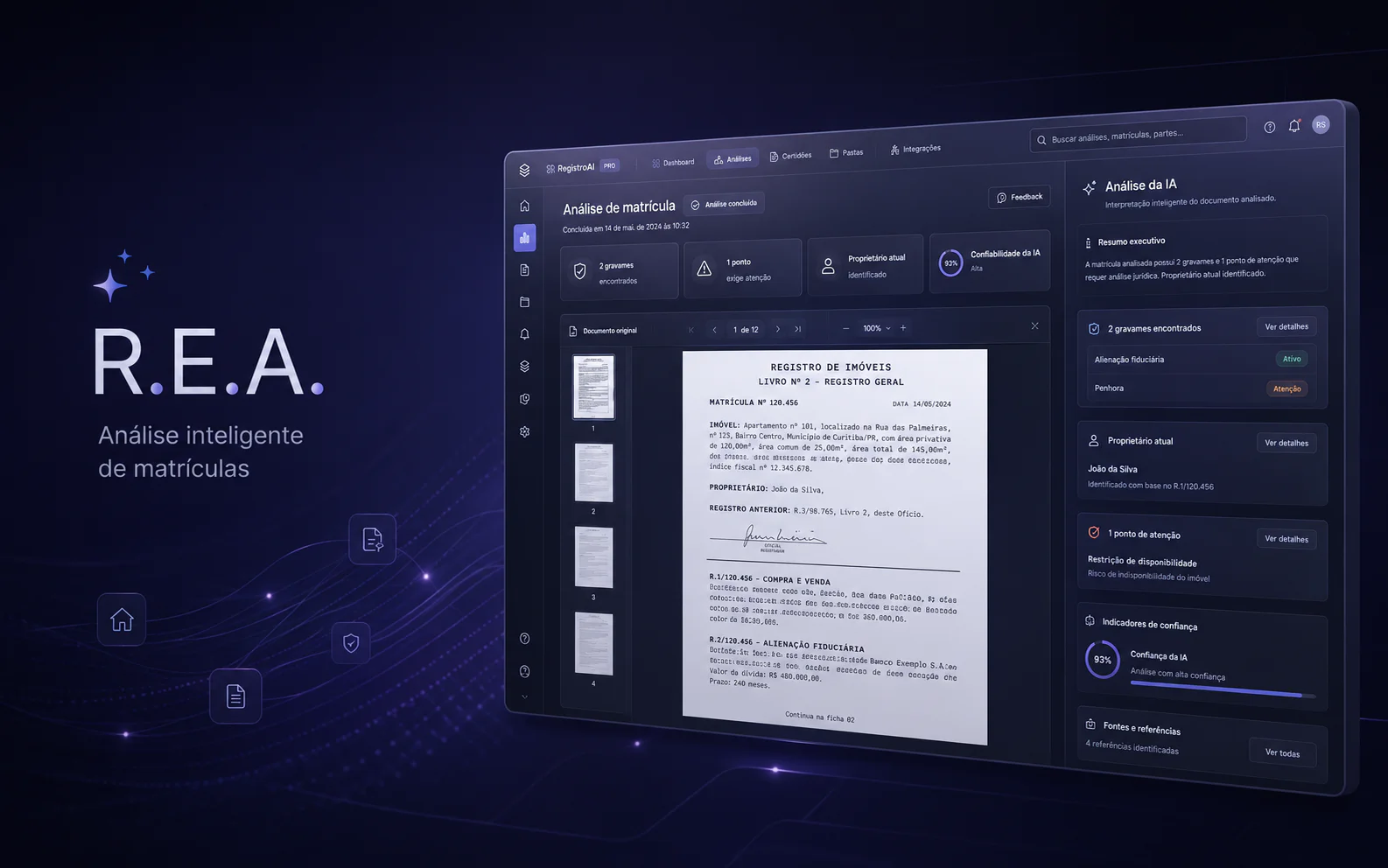
Project rebuilt for portfolio purposes with anonymized information and reconstructed visual elements.
Overview
R.E.A. was an AI-based feature for reading and interpreting property records and real estate certificates, aimed at identifying relevant information for credit operations and risk analysis. The technology already found important points in the document, but the experience still demanded excessive effort to interpret what really mattered.
Context
The feature already delivered technical value by extracting and highlighting relevant information from documents. Even so, the reading remained fragmented, with little direction for the end user. There was a clear opportunity to improve perceived value, analysis speed and adoption of the flow within the product.
The problem
Even with good automated reading capability, the experience still left users with high cognitive effort to interpret the main findings.
- Difficulty quickly understanding the overall situation of the record;
- Lack of a clear summary of the main points of attention;
- Need to navigate through content to identify what was truly critical;
- Little immediate visibility of the value delivered by the AI.
Project goals
- Increase the perceived value of the AI;
- Reduce the time needed to interpret a property record;
- Make it easier to identify the main risks and restrictions;
- Make reading simpler for analysts;
- Increase the volume of records analyzed within the product.
My role
I worked on the redesign of the R.E.A. experience, focused on information structure, organization of the AI findings and the definition of a clearer interface for reading analyzed documents. The work involved understanding the problem with the team, reorganizing how results were presented and turning a complex analysis into a simpler, more scannable experience, useful for decision-making.
Discovery and process
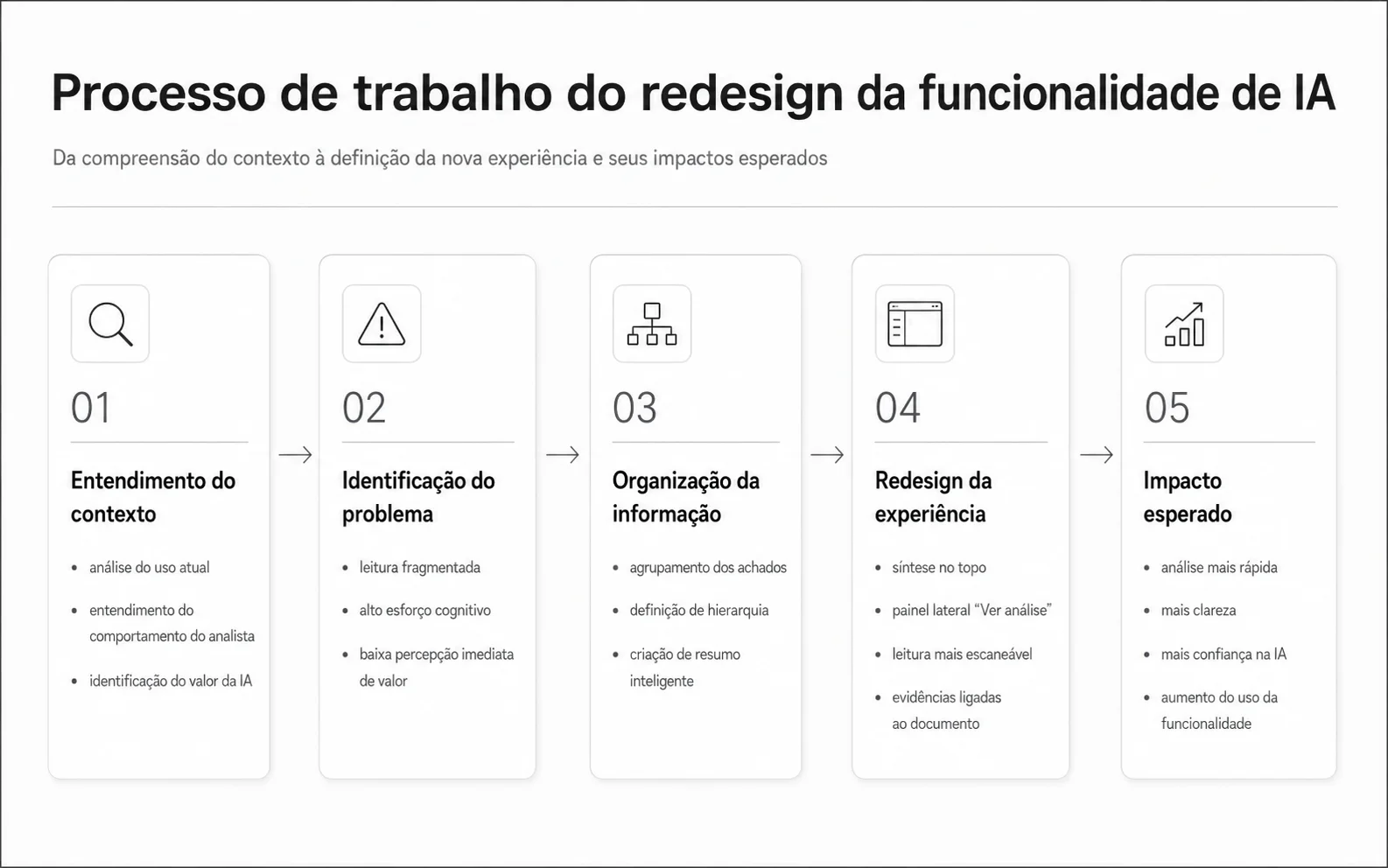
The investigation started from the understanding that the feature already had relevant technical capability, but could still evolve in usability, readability and perceived value.
- Understanding the analyst's expected behavior when evaluating a record;
- Understanding the main points of attention found in the documents;
- Identifying opportunities to better highlight the AI findings;
- Reorganizing the reading to reduce effort and speed up understanding.
Project process
Solution
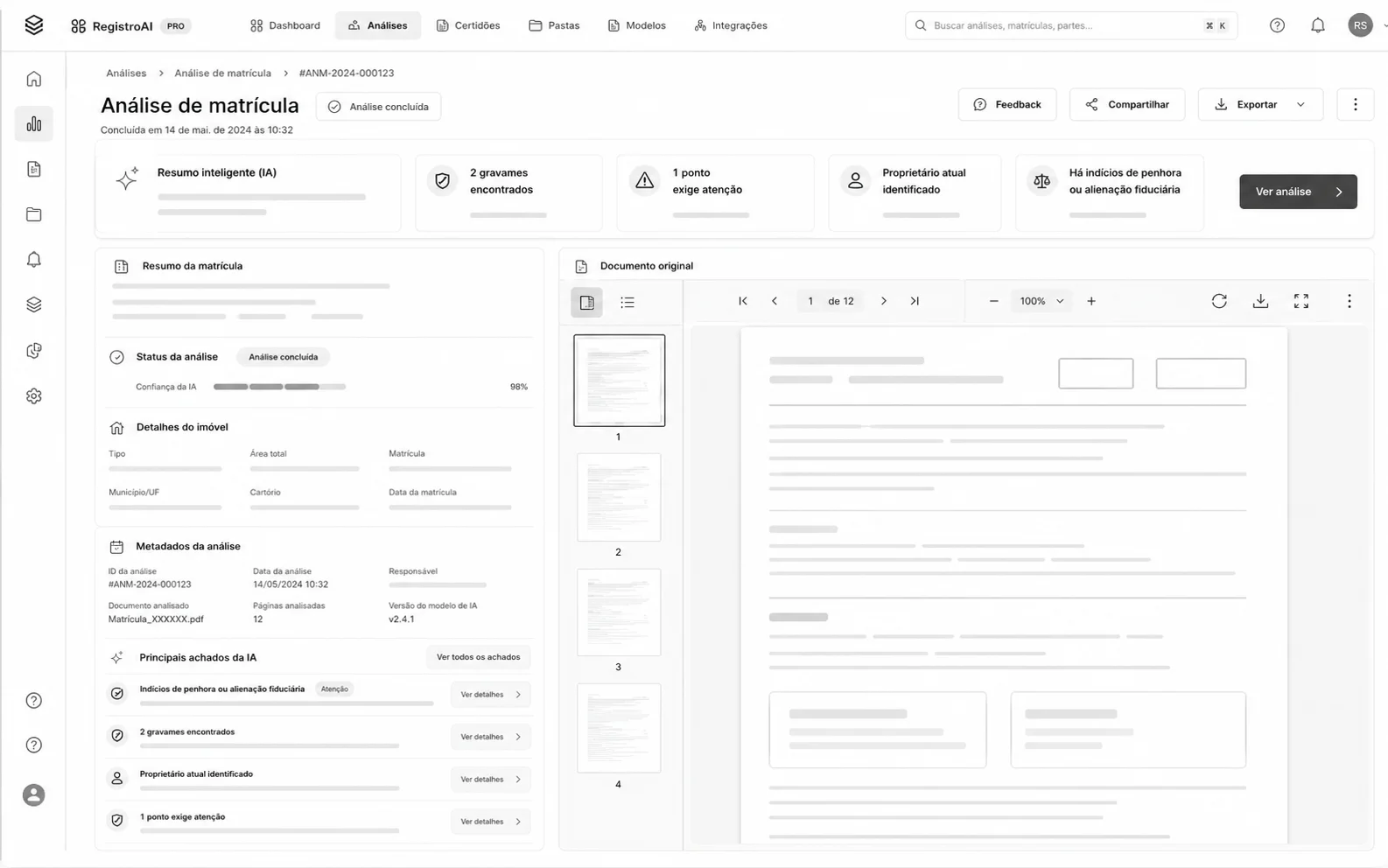
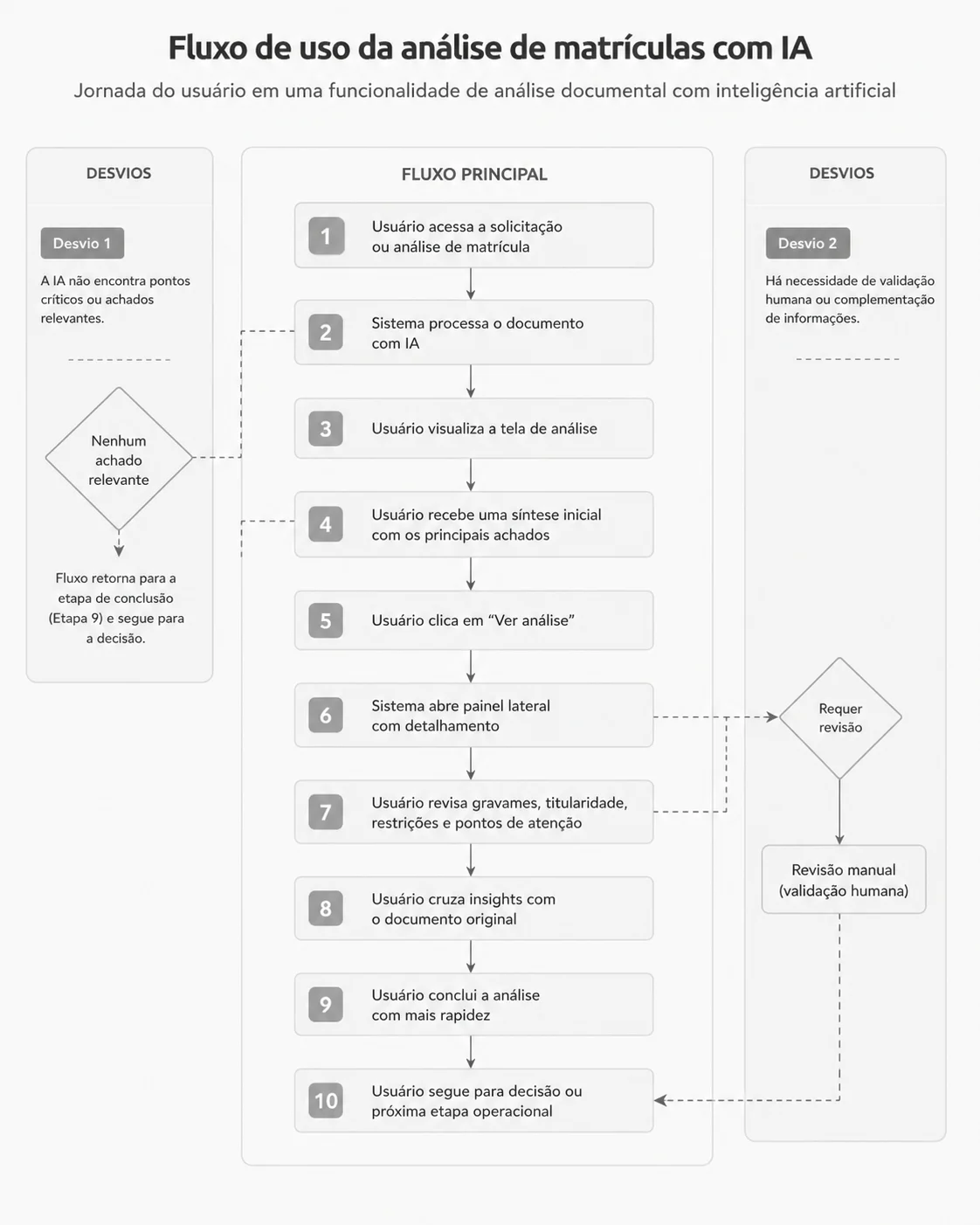
The solution started from the idea that good AI is not enough on its own. It needs to present its value clearly, directly and reliably. The redesign reorganized the experience into an initial synthesis layer and a deep-dive layer for when users needed to investigate findings further.
- Smart summary at the top of the analysis;
- A more objective layer to quickly understand the record's situation;
- More scannable reading of findings, risks and restrictions;
- Greater perception of the value the AI actually delivers.
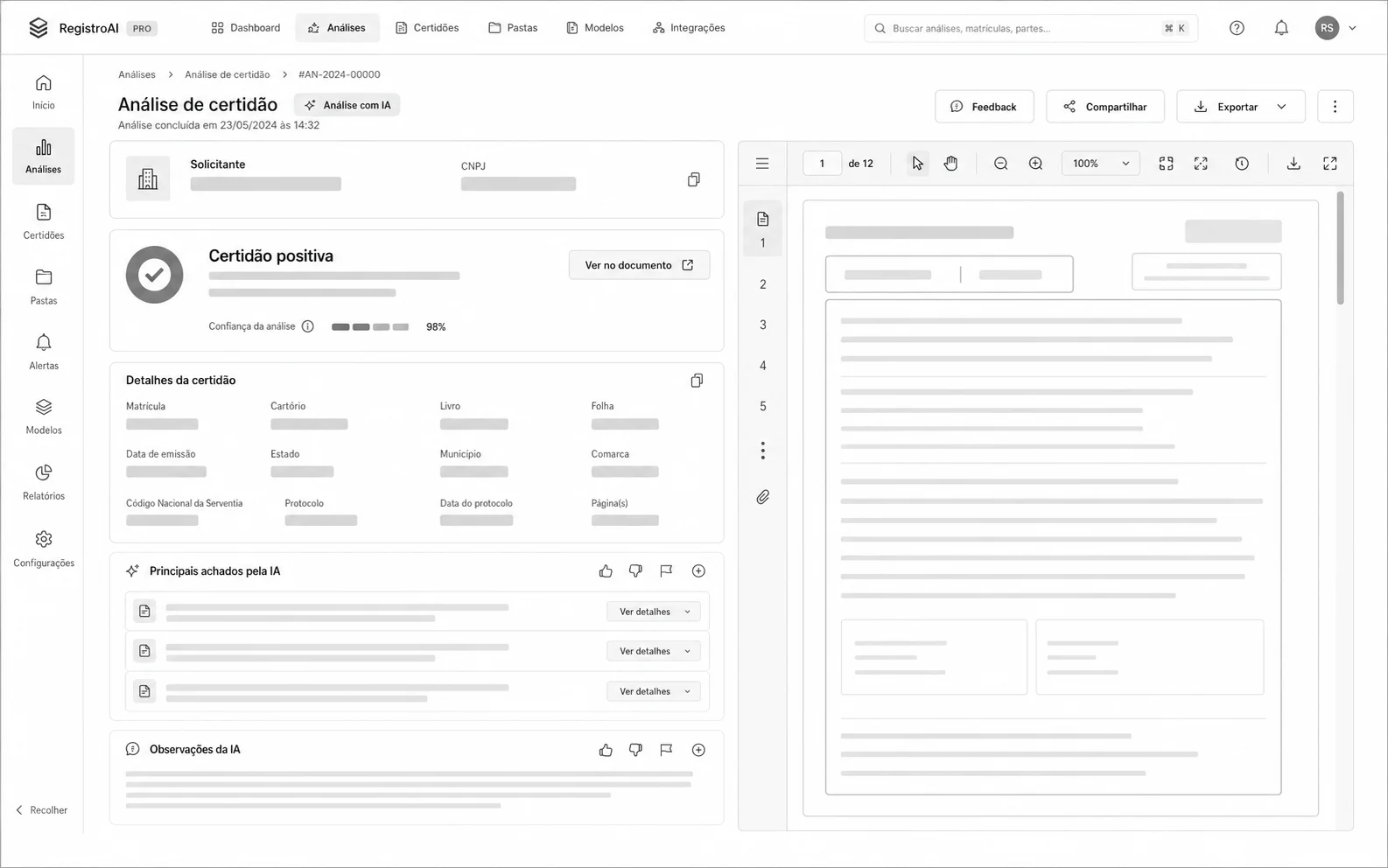
Flow screens
Usage journey
Results and impact
- 27% increase in the volume of records analyzed per user in the period;
- 19% growth in interaction with the AI analysis feature;
- Improved perception of clarity and analysis speed among users.
With the new structure, the analysis started communicating the AI's value better and reducing the effort needed to find the most important points in the document. The combination of a more objective initial summary and more organized reading helped speed up analysis, bring more clarity to the process and increase usage of the feature within the product.
Learnings
This project reinforced the importance of thinking about AI experiences beyond technical capability. It is not enough for the system to find the right information. The interface must clearly communicate what was found, why it matters and how it helps the user make a faster, safer decision.
Note: this case was rebuilt with anonymized data, reconstructed screens and metrics representative of the original context, preserving the product reasoning, the nature of the solution and the expected impact of the redesign.